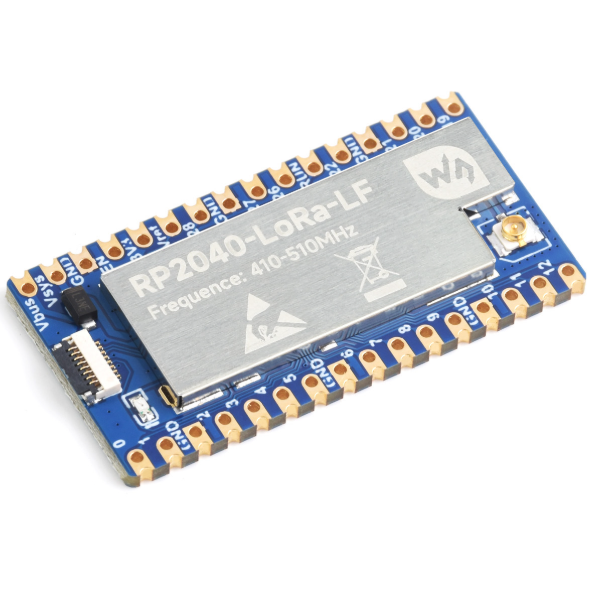
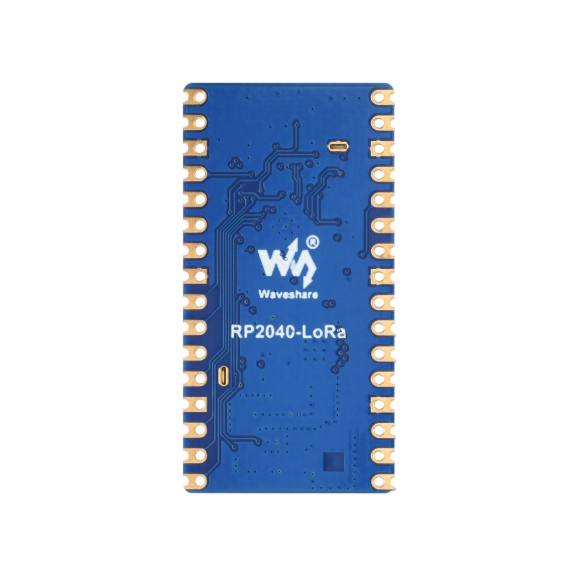
Esta es una placa de desarrollo integrada que combina el microcontrolador Raspberry Pi RP2040 y el chip Semtech SX1262 LoRa RF..
Está diseñado para:
- Bajo consumo de energía
- Comunicación de largo alcance
- Fácil desarrollo
- Integración escalable de producción en masa
Soportes:
- Comunicación punto a punto LoRa
- Redes de transmisión y retransmisión
- Desarrollo de terminales LoRaWAN (con soporte de puerta de enlace)
1. Posicionamiento central & Ventajas clave
Microcontrolador (MCU)
- Frambuesa Pi RP2040 (chip oficial)
- Cortex-M0+ de doble núcleo @ 133 megahercio
- 264 KB SRAM + 2 Flash MB
- Soporta MicroPython, C/C++, y programación de arrastrar y soltar UF2
- Ecosistema maduro, amigable para principiantes
Rendimiento de radiofrecuencia (SX1262)
- Chip LoRa de próxima generación (actualización desde SX1278)
- Sensibilidad del receptor: -148 dBm
- Potencia máxima de transmisión: 22 dBm
- Energía ultrabaja: dormir < 2 µA
- Fuerte rendimiento antiinterferencias
- Rango de comunicación: 5–8 kilómetros+ (línea de visión)
Diseño de hardware
- Agujero de sello + diseño dual del encabezado del pin
- Adecuado para integración directa en PCB (producción en masa)
- También admite la creación de prototipos de placas de pruebas.
- Interfaz tipo C desmontable (a través del conector FPC)
- Permite la depuración y programación.
- Se puede eliminar en producción para reducir costos.
Protocolos de comunicación
- Soporte nativo para:
- LoRa punto a punto
- Transmisión
- Redes de retransmisión
- Soportes LoRaWAN (Clase A/B) a través de la integración de la puerta de enlace
- Compatible con TTN y ChirpStack
- Ideal para implementaciones LPWAN IoT
2. Especificaciones clave (LF / Versiones HF)
| Parámetro | Especificación |
|---|---|
| MCU | RP2040 (Cortex-M0+ de doble núcleo a 133 MHz, 264 KB SRAM, 2 Flash MB) |
| chip de radiofrecuencia | Semtech SX1262 |
| Frecuencia | LF: 410–525MHz (433/470 megahercio) / frecuencia cardíaca: 850–930MHz (868/915 megahercio) |
| Modulación | lora / (GRAMO)FSK |
| Transmitir potencia | 0–22dBm (10 / 13 / 17 / 22 dBm ajustable) |
| Sensibilidad del receptor | -148 dBm @ 2.4 kbps (SF12, 125 kilociclos) |
| Velocidad de datos | lora: 0.3–62,5 kbps; FSK: arriba a 300 kbps |
| Rango | 5–8 kilómetros+ (LOS, 22 dBm + 5 antena dBi) |
| Consumo de energía | Texas: 107–118 mA; RX: 5.3 mamá; Dormir: <2 µA |
| Fuente de alimentación | 3.3V (Cabecera tipo C o pin), compatible con batería |
| Interfaces | SPI, GPIO, UART, I2C, PWM, CAD |
| Antena | conector IPEX (apoya SMA / antena externa) |
| Tamaño | 21 × 41 milímetros (Factor de forma compatible con Pico) |
| Temperatura de funcionamiento | -40°C a +85°C |
3. Hardware integrado & Interfaces
Sección MCU RP2040
- Cortex-M0+ de doble núcleo hasta 133 megahercio
- Incorporado 264 KB SRAM y 2 Flash MB
- Admite programación de arrastrar y soltar UF2 (Modo de almacenamiento masivo USB)
Expansión GPIO:
- 20+ GPIO multifunción
- Soporta SPI, I2C, UART, PWM, CAD
- Compatible con el ecosistema Raspberry Pi Pico
Botones & Indicadores:
- botón de reinicio
- botón de ARRANQUE (ingresar al modo de programación)
- LED de alimentación y estado
Diseño modular:
- La placa base se conecta a través de FPC (8-alfiler) al adaptador tipo C
- El adaptador proporciona energía, depuración, y programación
- Se puede quitar para integración directa en PCB
Sección RF SX1262
- Circuito RF independiente con blindaje para mejorar la estabilidad.
- Conector de antena IPEX para antenas externas de alta ganancia
- Comunicación SPI con RP2040
Admite funciones avanzadas:
- Despertar por radio (TRABAJO)
- Escuche antes de hablar (LBT)
- Comprobación de errores CRC
- Detección RSSI
- Filtrado de direcciones
- Cifrado de datos
4. Funciones principales & Funciones de desarrollo
Comunicación LoRa
- Punto a punto / Transmisión / Multidifusión
Comunicación directa entre nodos sin puerta de enlace. - Relé de saltos múltiples
Amplía el alcance de comunicación y supera obstáculos. - Soporte de terminal LoRaWAN
Compatible con TTN y ChirpStack para conectividad en la nube
Operación de energía ultrabaja
- Soporta WOR (Despertar por radio)
- Los nodos permanecen en modo de suspensión y se despiertan periódicamente
- Funcionamiento con pilas para meses para 1 año
Ecosistema de desarrollo
- Lenguajes de programación:
- MicroPython (Recomendado para creación rápida de prototipos.)
- C/C++ (arduino / SDK de Pico)
- Depuración:
- Interfaz tipo C para comunicación en serie
- Herramientas de PC para configuración y transmisión de datos.
- Recursos:
- Wiki oficial
- esquemas & Archivos PCB
- Código de ejemplo (Pitón / do)
- Ejemplos de integración LoRaWAN
- Conjunto de comandos AT
5. Aplicaciones típicas
Dispositivos finales de IoT
- Temperatura, humedad, presión, nivel de liquido, suelo, Sensores PM2.5
- Medidores inteligentes (electricidad, agua, gas)
- Sistemas de seguridad (alarmas, detección de movimiento)
Sistemas inalámbricos industriales
- comunicación PLC
- Monitoreo de equipos
- Sistemas de control remoto
- Redes de IoT de fábrica
Agricultura inteligente & Monitoreo Ambiental
- invernaderos
- Estaciones meteorológicas
- Monitoreo de la calidad del agua
- Detección de incendios forestales
- Detección remota en exteriores
Dispositivos que funcionan con baterías
- De largo alcance, transmisión inalámbrica de baja potencia
- Ideal para entornos remotos y fuera de la red
Integración de producción en masa
- El diseño de orificio para sello permite la soldadura directa en los PCB del producto
- Elimina la necesidad de una MCU separada + módulo LoRa
- Reduce el costo y la complejidad del sistema
6. Desarrollo & Notas de uso
Configuración de hardware
- Conéctese a través de una placa de pruebas o suelde en la placa base
- Conecte la antena IPEX (no transmitir sin antena)
- Alimentación a través de Type-C o 3.3V
Inicio rápido
- Utilice MicroPython con el controlador SX1262
- Configurar frecuencia, tasa de datos, y transmitir potencia
- Utilice funciones de envío/recepción para la comunicación
Cumplimiento de frecuencia
- Usar la versión LF (433/470 megahercio) para China
- Siga las regulaciones locales de RF para potencia y frecuencia.
Notas importantes
- SX1262 es un chip de capa física
- LoRaWAN requiere implementación de pila de protocolos o bibliotecas
- La comunicación punto a punto NO requiere una puerta de enlace
- LoRaWAN requiere una puerta de enlace compatible