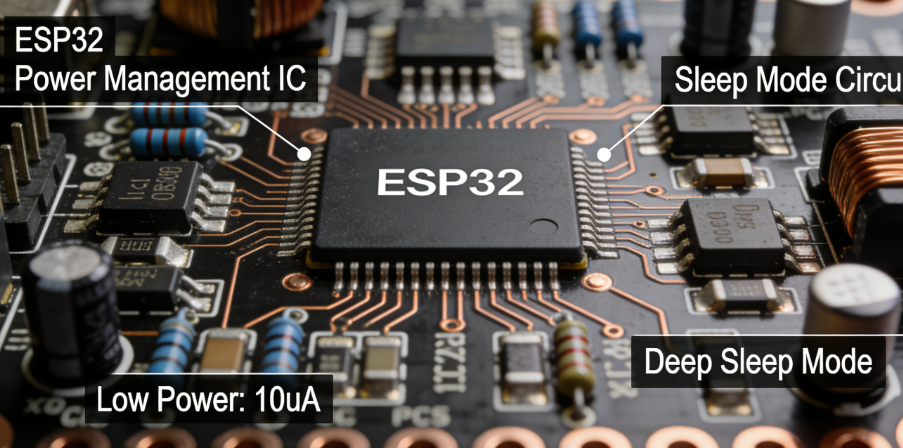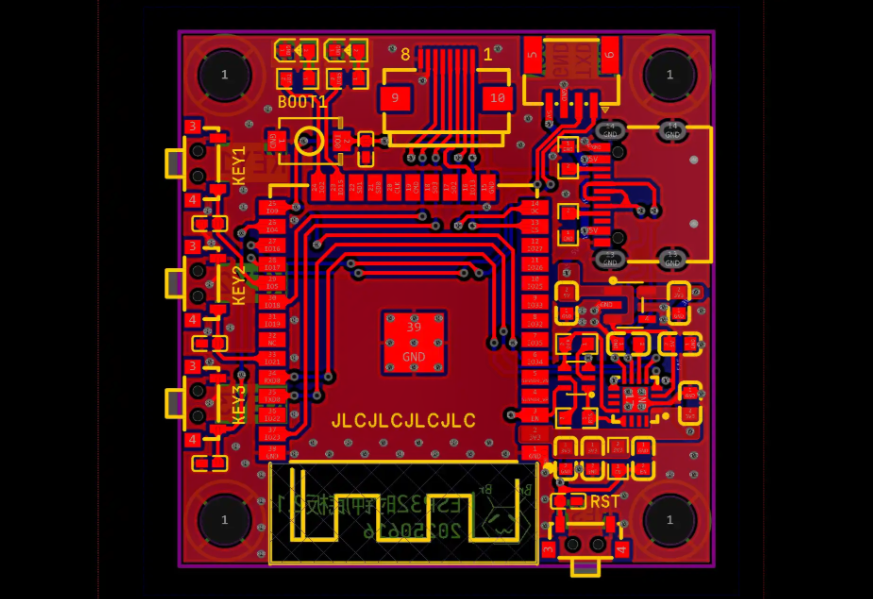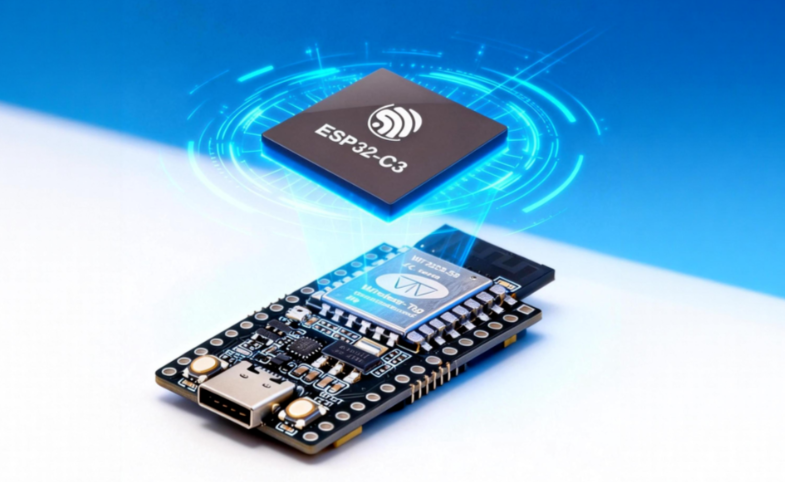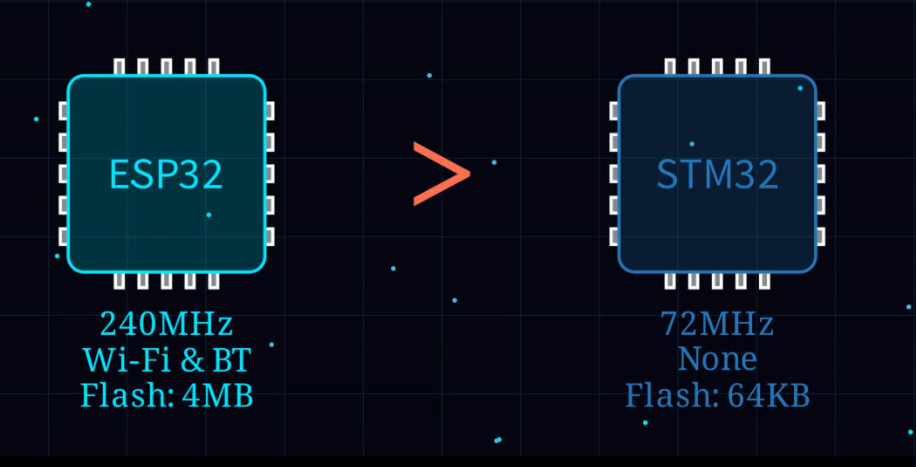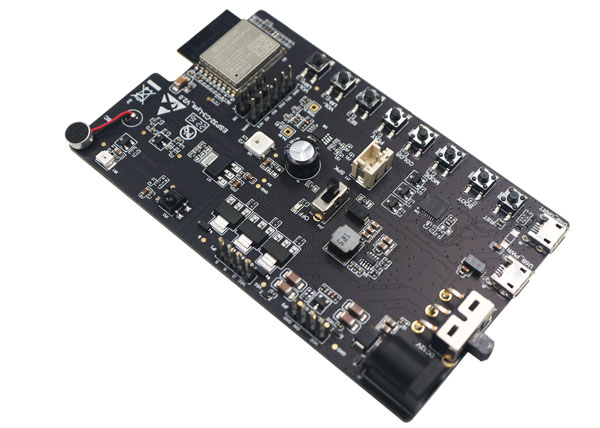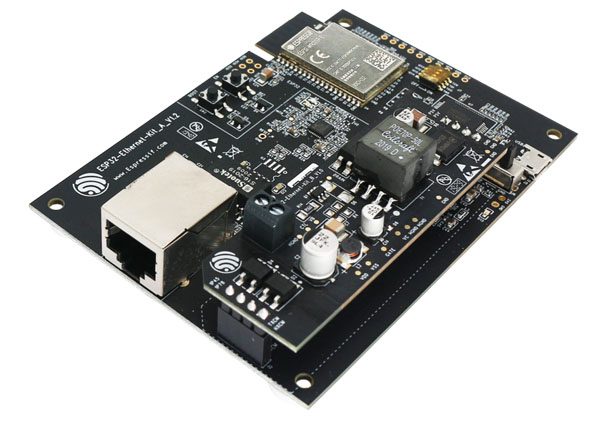
ESP32 is a wireless‑first MCU with native WiFi and Bluetooth, ideal for consumer IoT, smart home devices, cloud connectivity, rapid prototyping and low‑cost mass production. STM32 delivers hard real‑time control, ultra‑low sleep power, industrial temperature resistance and automotive certification, perfect for motor drive, PLC peripherals, medical devices and high‑reliability embedded hardware. For professional Industrial IoT (IIoT), engineers widely adopt the STM32 + ESP32 hybrid design: STM32 handles precise control and safety logic, while ESP32 manages all WiFi/BLE cloud data transmission.
What Is ESP32? Core Introduction & 2026 Main Models
ESP32 is a low‑cost dual‑core MCU family designed by Espressif Systems, fully integrated with WiFi and Bluetooth for wireless embedded projects. It dominates the consumer IoT market due to open‑source support, simple coding and native over‑the‑air (OTA) updates.
Core Strengths of ESP32
- Built‑in WiFi 802.11 b/g/n + BLE 5.0/5.3 (C6 version supports WiFi 6)
- Dual‑core Tensilica LX6 processor with flexible clock scaling
- Supports Arduino IDE, ESP‑IDF, MicroPython (fast development for beginners)
- Native MQTT, HTTP, HTTPS for direct cloud connection
- Built‑in OTA remote firmware upgrade for after‑sales maintenance
- Huge community resources, thousands of open‑source projects
Best ESP32 Variants in 2026 (For Different Projects)
- ESP32‑C6: WiFi 6 + BLE 5.3, low power, new generation sensor nodes
- ESP32‑S3: Large memory, strong computing power, complex IoT logic & USB support
- Classic ESP32‑WROOM: Lowest BOM cost for mass smart home production
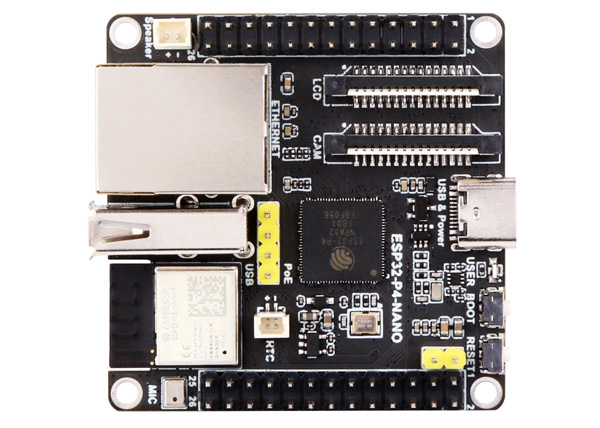
- ESP32‑P4: High‑end multimedia & industrial wireless edge devices
Weaknesses of ESP32
- WiFi active current high (not ideal for ultra‑long battery life)
- Wireless stack interferes with high‑precision ADC & real‑time interrupts
- Mainly consumer grade; poor EMC resistance in strong industrial interference
What Is STM32? Core Introduction & 2026 Main Series
STM32 is the global standard ARM Cortex‑M MCU family from STMicroelectronics, covering ultra‑low power, high‑speed control, industrial and automotive grades. It is the first choice for engineers pursuing stability, precision and long product lifecycles.
Core Strengths of STM32
- Hard real‑time interrupt response for PWM, closed‑loop control and sampling
- Ultra‑low power modes (STOP/Standby) for multi‑year battery operation
- Rich industrial peripherals: CAN, Ethernet, high‑resolution ADC, advanced PWM
- Wide temperature range: ‑40℃ ~ +85℃ / +125℃ for harsh environments
- AEC‑Q100 automotive certification & medical safety compliance
- Hardware secure boot, encryption and anti‑cloning protection
Main STM32 Series in 2026
- STM32L: Ultra‑low power, battery‑powered offline sensors
- STM32F: Classic general‑purpose control, stable and cost‑effective
- STM32H: High‑performance computing, complex logic & high‑speed data processing
- STM32G: Entry mass production for cost‑sensitive industrial boards
- STM32WB: Built‑in BLE (limited function, no native WiFi)
Weaknesses of STM32
- No native WiFi; external modules required for cloud connection
- Higher development threshold (STM32CubeIDE, clock & peripheral configuration)
- Longer project cycle for prototype verification
ESP32 vs STM32: Ultimate Detailed Comparison Table (2026 Engineer Data)
| Feature | ESP32 | STM32 |
|---|---|---|
| Native WiFi / Bluetooth | ✅ Full WiFi + BLE integrated | ❌ No WiFi; WB series only basic BLE |
| Real‑Time Interrupt Accuracy | Average (WiFi stack affects timing) | ✅ Excellent for motor & closed‑loop control |
| WiFi Active Current | 150–200 mA | N/A (needs external module) |
| Deep Sleep Current | 8–12 μA | ✅ 0.5–3 μA (STM32L ultra‑low power) |
| Development Difficulty | Easy (Arduino / MicroPython friendly) | Medium–Professional (HAL / register coding) |
| Industrial EMC & Anti‑Interference | Consumer grade only | ✅ Industrial / Automotive certified |
| CAN Bus / Ethernet Support | Not native | ✅ Full industrial communication peripherals |
| High‑Temp Working Range | 0℃ ~ 70℃ typical | ✅ ‑40℃ ~ 125℃ available |
| OTA Remote Upgrade | Native support | Requires external circuit & code development |
| 2026 Mass Production BOM Cost | Very low | Medium; automotive models higher |
| Best Scenario | IoT, smart home, wireless sensors, cloud devices | Industrial control, motor drive, medical, automotive |
Deep Dive: 5 Critical Key Differences (Engineer Practical View)
1. Wireless Connectivity — The Biggest Divide
ESP32 is designed for connection first: it connects to mobile apps, Alibaba/AWS/Azure cloud via WiFi & BLE directly.
STM32 cannot access the internet alone. Adding external WiFi modules increases PCB difficulty, antenna design risk and overall cost.
✅ Conclusion: All cloud‑connected IoT products prioritize ESP32.
2. Real‑Time Control & Precision Stability
STM32 uses pure ARM real‑time architecture:
- Accurate PWM frequency for BLDC motor control
- Stable high‑speed ADC sampling without interference
- Reliable Modbus RTU/TCP for industrial equipment
ESP32’s WiFi radio frequency interferes with analog sampling; real‑time tasks may jitter during data transmission.
✅ Conclusion: Any precise control project must use STM32.
3. Power Consumption & Battery Life (Critical for Sensor Nodes)
- ESP32: When WiFi wakes up to upload data, power consumption surges; suitable for frequent power supply devices
- STM32L: Ultra‑deep sleep achieves several years of battery life with lithium batteries
✅ Conclusion: Long‑life offline sensor products choose STM32 without hesitation.
4. Development Speed & Team Threshold
- ESP32: One engineer can finish a WiFi data upload demo in hours; perfect for startups & student teams
- STM32: Needs professional embedded engineers to configure clocks, peripherals and interrupts; higher technical threshold
✅ Conclusion: Fast iteration & prototype projects choose ESP32.
5. Environmental Adaptability & Long‑Term Reliability
STM32 passes strict industrial aging tests, anti‑interference and high/low temperature verification; stable in factories, vehicles and medical environments.
ESP32 is consumer electronics grade; not suitable for harsh industrial scenes.
✅ Conclusion: Automotive, medical and factory equipment only trust STM32.
Exact Use Case Guide: When to Choose ESP32
Pick ESP32 if your project includes:
- Smart plugs, smart lights, smart switches & full home automation
- WiFi temperature/humidity, air quality IoT sensors with cloud upload
- BLE mobile app wireless control devices
- MQTT/HTTP cloud communication & remote monitoring systems
- Fast prototyping, student projects & startup rapid verification
- Low‑cost mass production for consumer electronic goods
- Devices needing native OTA remote firmware updates
Exact Use Case Guide: When to Choose STM32
Pick STM32 if your project needs:
- Industrial automation equipment, PLC extensions & factory control boards
- BLDC motor drivers, servo control & high‑precision motion systems
- Medical devices requiring safety stability & long service life
- Automotive electronics, on‑board sensors & vehicle control modules
- Ultra‑low power offline sensors running on small batteries for years
- High‑speed signal acquisition, data filtering & professional embedded algorithms
Can ESP32 Replace STM32? Real Industry Answer (2026 Updated)
No, they cannot fully replace each other.
ESP32 lacks real‑time stability for industrial control; STM32 cannot connect to the cloud without external hardware.
Industry Standard Solution: STM32 + ESP32 Dual MCU Hybrid Design
This is the most mature architecture in 2026 for Industrial IoT & high‑end smart devices:
- STM32 Core: Responsible for data sampling, motor drive, safety protection, industrial protocol logic
- ESP32 Assistant: Only responsible for WiFi/BLE wireless transmission, cloud upload & mobile app communication
- Communication Method Between Two Chips: UART / SPI / I2C stable data interaction
This design balances precision control + wireless connectivity, solving both real‑time stability and cloud interconnection problems.
2026 Advanced FAQ
Q1: Which MCU is better for IoT projects in 2026?
A1: Pure consumer IoT chooses ESP32; Industrial IoT chooses STM32 + ESP32 dual‑chip solution.
Q2: Is STM32 more powerful than ESP32 overall?
A2: STM32 is stronger in real‑time control, stability and low power; ESP32 dominates wireless connection and cloud communication.
Q3: Which one saves more cost for mass production?
A3: ESP32 reduces overall BOM cost for wireless products; STM32 is more cost‑effective for offline industrial hardware.
Q4: Can STM32 connect to WiFi directly?
A4: No native WiFi; you must add an external ESP32 module for network access.
Q5: Which is better for battery‑powered sensor devices?
A5: STM32L ultra‑low power series achieves far longer battery life than ESP32.
Q6: Does ESP32 support WiFi 6 in 2026?
A6: Yes, ESP32‑C6 fully supports WiFi 6 and BLE 5.3 for new‑generation low‑power IoT nodes.
Final Comprehensive Summary
ESP32 remains the top wireless IoT MCU in 2026, with native WiFi/BLE, easy development and low cost, perfectly matching smart home, cloud sensors and fast prototyping demands. STM32 is the irreplaceable industry standard for real‑time control, ultra‑low power consumption, high temperature resistance and high‑reliability embedded hardware in industrial, automotive and medical fields.
For professional commercial products in 2026, the STM32 + ESP32 dual‑chip hybrid architecture is still the most balanced engineering solution, combining precise control and seamless wireless cloud connectivity.