In today’s consumer electronics market, AI-powered toys and highly interactive smart devices are experiencing rapid growth. For hardware manufacturers, this trend presents significant opportunities—along with substantial technical challenges. Developing products with local voice wake-up, image recognition, or natural conversational capabilities traditionally requires multiple chips, complex algorithm integration, and high R&D costs.
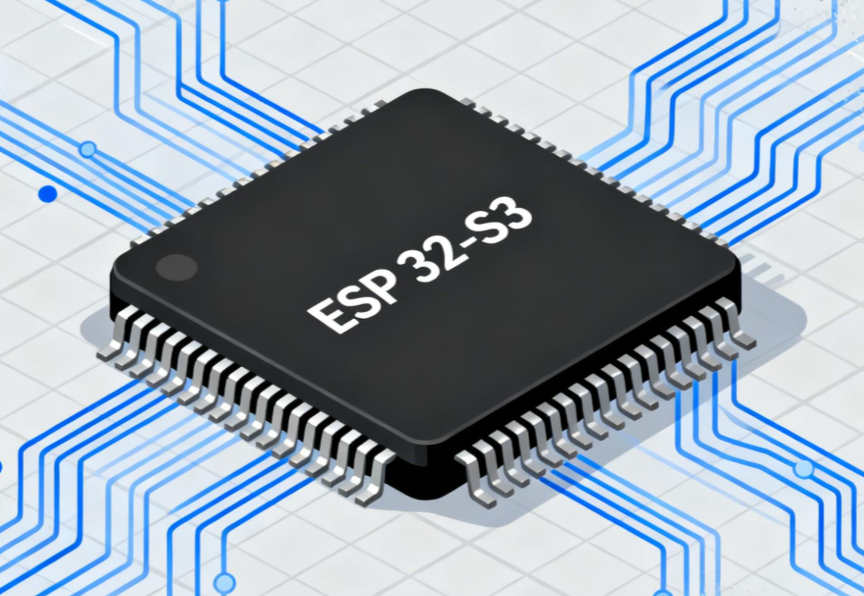
As a SoC purpose-built for edge AI and IoT, Espressif’s ESP32-S3 delivers a complete solution spanning hardware and software frameworks, effectively addressing these challenges and simplifying the development of intelligent AIoT devices.
Core Capabilities
ESP32-S3 is not merely a connectivity chip—it is a system-level platform that integrates strong processing performance, flexible memory architecture, and efficient development tools.
Processor & AI Computing Power
The ESP32-S3 features a dual-core Xtensa® 32-bit LX7 processor running at up to 240 MHz, providing a solid foundation for real-time processing and concurrent multitasking.
Its key AI advantage lies in the extended vector instruction set, which efficiently executes integer multiply-accumulate operations (MUL32, SAR) used in neural network inference. This enables on-device execution of quantized AI models such as speech recognition, keyword spotting, and lightweight image classification—without relying entirely on cloud processing. As a result, latency is reduced and user privacy is better protected.
Memory Architecture
Adequate memory is essential for AI workloads. ESP32-S3 offers 512 KB of on-chip SRAM and supports up to 1 GB of external PSRAM via QSPI. This flexible configuration allows developers to store more complex models in memory for faster inference, avoiding performance bottlenecks caused by frequent Flash access.
Connectivity & Interfaces
In addition to Wi-Fi 4 and Bluetooth 5, ESP32-S3 integrates a wide range of peripherals, including USB OTG, camera (DVP) interface, LCD display interface, and multiple UART, SPI, and I2C channels. This enables a single chip to handle AI processing while directly connecting to microphone arrays, camera sensors, and touch displays, making it ideal for highly integrated product designs.
Development Ecosystem
Espressif provides the ESP-IDF development framework along with a rich set of pre-trained AI model libraries (e.g., wake-word detection and face recognition), significantly lowering the development barrier. Recently, the Espressif ecosystem has also enabled integration with mainstream large language models (LLMs). Using official reference examples, developers can add cloud-based conversational intelligence to their devices, rapidly building products capable of multi-turn natural interactions.
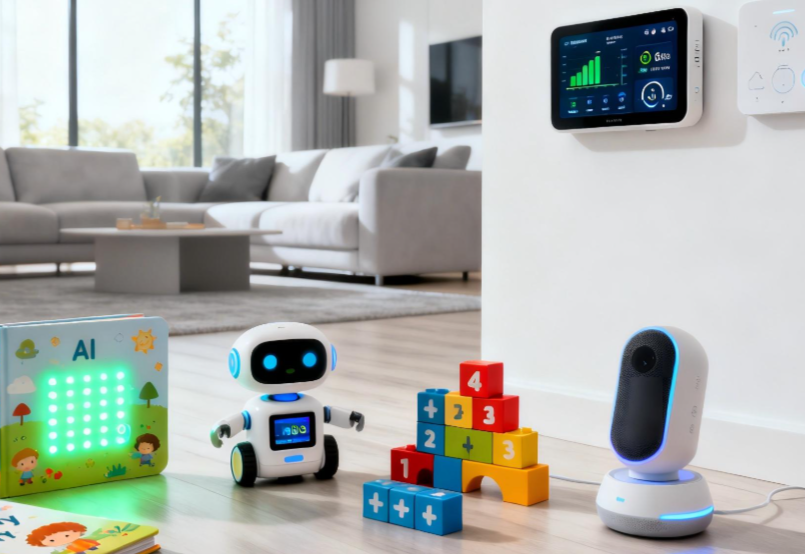
Typical Application Scenarios
1. AI Storytelling Devices & Companion Robots
Traditional storytelling devices offer limited functionality. An ESP32-S3–based solution enables:
- Local, low-power voice wake-up
Built-in wake-word models allow the device to remain responsive without maintaining a continuous cloud connection, reducing power consumption. - Cloud-based semantic dialogue
After wake-up, the device streams audio via Wi-Fi to cloud-based LLM services (such as ChatGPT or similar platforms), enabling natural, context-aware conversations and educational companionship. - Local audio processing
Integrated audio encoding and decoding support high-quality audio playback and recording.
2. Smart Vision Interaction Modules
Used in educational toys or smart home terminals to enable visual perception:
- Object & gesture recognition
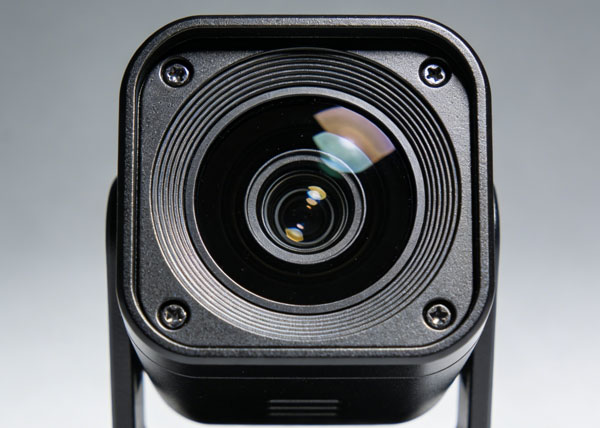
Leveraging the chip’s processing power and camera interface, lightweight vision models can identify specific objects, cards, or simple gestures, supporting interactive learning or control scenarios. - Face detection
Enables intelligent device activation and basic personalized interactions.
Mass Production Support & Development Entry Point
For customers planning mass production, Espressif provides fully certified module variants (such as the ESP32-S3-WROOM-1 series), which can be directly integrated into end products to accelerate time-to-market.
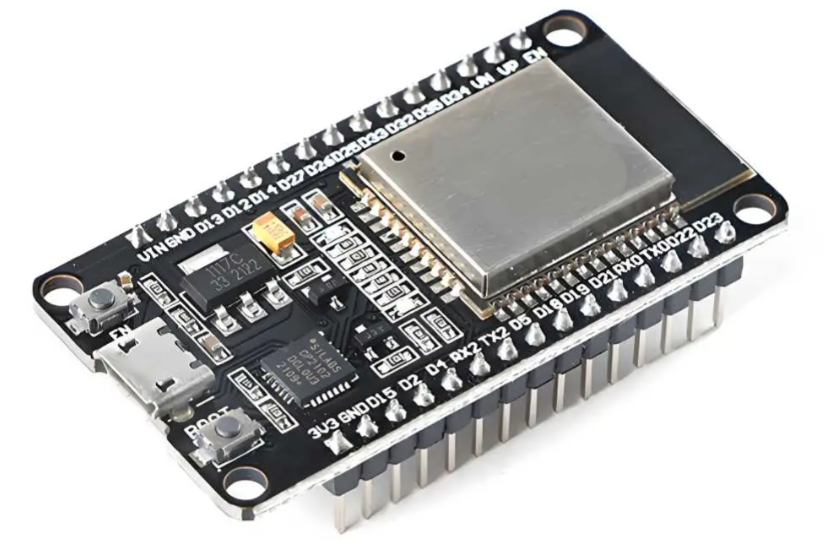
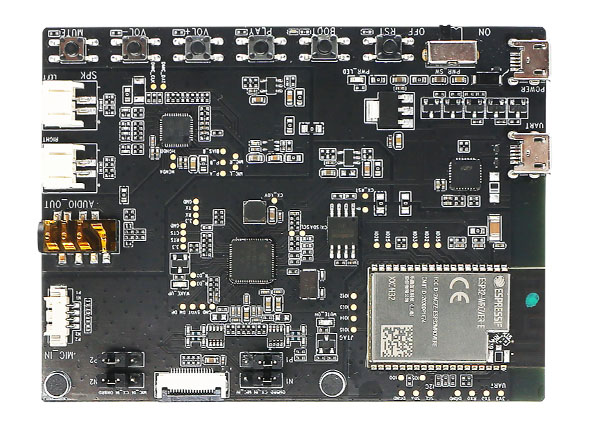
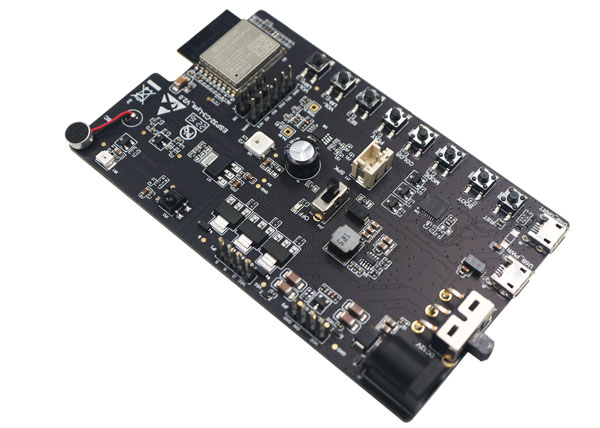
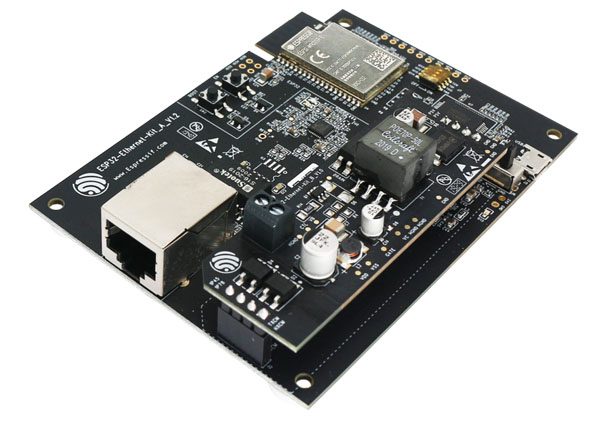
For development, it is recommended to start with the ESP32-S3-DevKitC, which includes all major peripheral interfaces and an onboard debugger. Combined with Espressif’s official model deployment toolchain, developers can quickly evaluate and migrate their AI models.
Conclusion
By integrating processing power, connectivity, and edge AI capabilities, the ESP32-S3 transforms what once required complex multi-chip system designs into a single-chip, rapid-development solution for intelligent interaction products. It directly addresses hardware manufacturers’ core concerns around performance, cost, and development efficiency when building modern AIoT devices.
leadsintec offers the full range of Espressif chips and modules, including ESP32, ESP32-S, and ESP32-C series. Beyond product supply, leadsintec provides localized services such as technical selection support, solution development assistance, and production pre-configuration—helping developers and enterprises accelerate project deployment and commercialization.