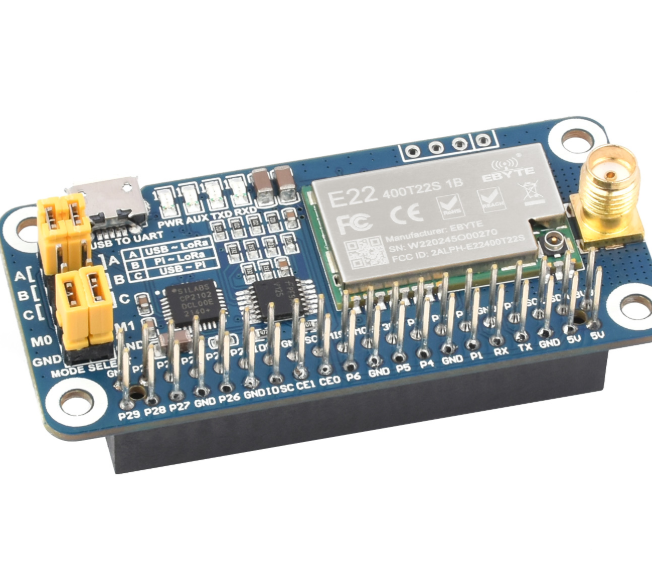
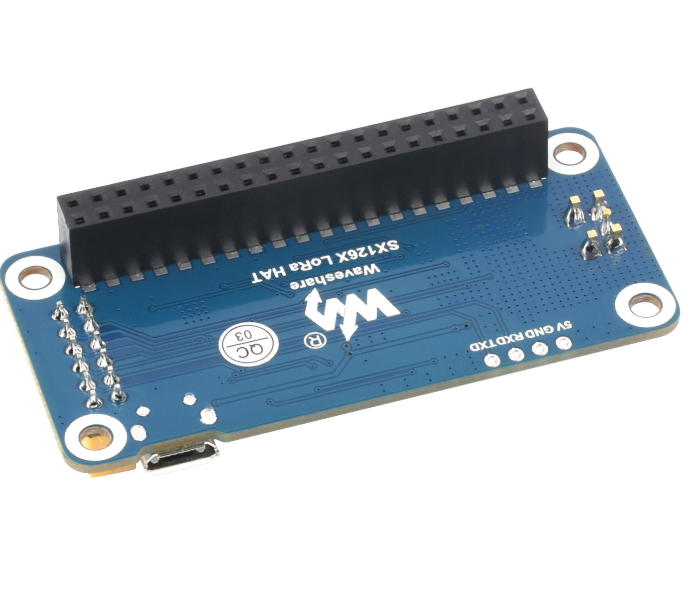
Bei diesem Produkt handelt es sich um eine Raspberry Pi-Erweiterungsplatine, die auf dem SX1268/SX1262-Chipsatz basiert, Integration eines LoRa-fähigen drahtlosen seriellen Kommunikationsmoduls.
Es verfügt über:
- Mehrstufiges Relais für die Kommunikation über große Entfernungen
- Weckkommunikation mit geringem Stromverbrauch
- Verschlüsselte Datenübertragung
⚠️ Hinweis: Dieses Produkt unterstützt LoRaWAN NICHT. Es ist für private LoRa-Netzwerke konzipiert (Punkt-zu-Punkt, übertragen, und Relaiskommunikation).
1. Kernpositionierung & Hauptmerkmale
Entwickelt für volle Kompatibilität mit der Raspberry Pi-Serie (4B / 3B+ / Null, usw.), Diese Platine wird direkt über den 40-Pin-GPIO-Header angeschlossen – kein Löten erforderlich, Plug-and-Play.
Wichtigste Highlights:
- Sub-GHz 433 MHz-LoRa-Kommunikation
Erweitert den Raspberry Pi sofort um drahtlose Langstreckenfähigkeit - SX1268-Chip der nächsten Generation
Im Vergleich zu SX1278:- Höhere Empfängerempfindlichkeit
- Geringerer Stromverbrauch
- Stärkere Anti-Interferenz
- Größere Kommunikationsreichweite (bis zu 5 km+ Sichtlinie)
- Duale Steuerschnittstellen
- UART über Raspberry Pi GPIO
- Integrierter CP2102 USB-zu-UART für PC-Debugging
- Unterstützt Raspberry Pi, PC, oder externe MCU (Arduino / STM32) Kontrolle
- Funktionen auf Industrieniveau
- Wake-on-Radio (WOR)
- Hören Sie zu, bevor Sie sprechen (LBT)
- Mehrstufige Relaisvernetzung
- RSSI-Erkennung
- Datenverschlüsselung
- Ultra-Low-Power-Schlafmodus
2. Wichtige Spezifikationen (SX1268 433 MHz-Version)
| Parameter | Spezifikation |
|---|---|
| RF-Chip | Semtech SX1268 (433 MHz) |
| Frequenzband | 410.125–493,125 MHz (Standard 433 MHz, ISM-lizenzfrei) |
| Modulation | LoRa Spread Spectrum / (G)FSK |
| Sendeleistung | Bis zu 22 dBm (konfigurierbar: 10 / 13 / 17 / 22 dBm) |
| Empfängerempfindlichkeit | -147 dBm @ 2.4 kbit/s (SF12, 125 kHz) |
| Luftdatenrate | 0.3–62,5 kbit/s (programmierbar) |
| Kommunikationsreichweite | 5 km+ (Sichtlinie, 5 dBi-Antenne); erweiterbar über Relais |
| Betriebsspannung | 5V (über Raspberry Pi GPIO); Logikpegel 3,3V |
| Stromverbrauch | TX: 110 mA; RX: 11 mA; Schlafen: <2 μA |
| Kanäle | 81 wählbare Kanäle |
| Schnittstelle | UART (TTL), Baudrate 1200–115200 bps (Standard 9600) |
| Antennenschnittstelle | SMA (weiblich) + IPEX; beinhaltet 2 dBi 433 MHz-Antenne |
| Betriebstemperatur | -40°C bis +85°C (Industriequalität) |
| Abmessungen | Standardgröße des Raspberry Pi HAT |

3. Onboard-Hardware & Schnittstellen
Kernkomponenten
- SX1268 – Haupt-LoRa-RF-Chip (433 MHz)
- CP2102 – USB-zu-UART-Konverter für PC-Debugging und -Konfiguration
- 74HC125V – Levelshifter für stabile 3,3V / 5V-Kompatibilität
Schnittstellen
- 40-Pin GPIO-Header
Direkte Verbindung zum Raspberry Pi, nutzt UART-Schnittstelle - Micro-USB-Anschluss
Für CP2102-Debugging (Zur Konfiguration und Kommunikation mit dem PC verbinden) - Externer UART-Header
Unterstützt Arduino, STM32, oder andere MCUs (Standalone-Betrieb ohne Raspberry Pi)
Statusanzeigen (4 LEDs)
- PWR – Betriebsanzeige
- RXD / TXD – Indikatoren für die serielle Kommunikation
- ZU – Statusanzeige (beschäftigt / aufwachen / Relaiszustand)
Modusauswahl-Jumper (M0 / M1)
Unterstützt 4 Betriebsarten:
| M0 | M1 | Modus | Beschreibung |
|---|---|---|---|
| 1 | 1 | Transparenter Modus | Standard, Punkt-zu-Punkt / übertragen |
| 1 | 0 | Konfigurationsmodus | Frequenz einstellen, Rate, Leistung, Adresse, Verschlüsselung |
| 0 | 1 | WOR-Modus | Wake-on-Radio (Hören mit geringer Leistung) |
| 0 | 0 | Schlafmodus | Tiefer Schlaf (<2 μA), externes Wecken |
UART-Auswahlbrücken (A / B / C)
| Modus | Funktion |
|---|---|
| A | USB (CP2102) steuert LoRa |
| B | Raspberry Pi GPIO steuert LoRa (Standard) |
| C | USB greift auf Raspberry Pi UART zu (für Pi-Debugging) |
4. Kernfunktionen erklärt
LoRa-Spread-Spectrum-Kommunikation
Bietet starke Entstörung und hervorragende Beugungsleistung, Gewährleistung einer stabilen Kommunikation in komplexen Industrieumgebungen, im Freien, und Gebäudeumgebungen – herkömmlichen FSK/433-MHz-Modulen weit überlegen.
Multi-Level-Relay-Netzwerk
Unterstützt die automatische Weiterleitung zwischen Knoten, Überwindung von Hindernissen und Erweiterung der Kommunikationsreichweite für groß angelegte Einsätze.
Wake-on-Radio (WOR)
Ermöglicht einen Betrieb mit extrem geringem Stromverbrauch:
- Knoten bleiben im Schlafmodus
- Wachen Sie regelmäßig auf, um zuzuhören
- Aktivieren Sie die Kommunikation, wenn sie ausgelöst wird
👉 Ideal für batteriebetriebene Geräte mit einer Lebensdauer von Monaten bis 1 Jahr.
Hören Sie zu, bevor Sie sprechen (LBT)
Erkennt die Kanalaktivität vor der Übertragung, um Kollisionen zu vermeiden und die Kommunikationszuverlässigkeit in lauten Umgebungen zu verbessern.
Datensicherheit & Zuverlässigkeit
- Verschlüsselung mit Kommunikationsschlüsseln
- Adressfilterung (Unicast / übertragen)
- RSSI-Signalerkennung
- CRC-Fehlerprüfung
Flexible Konfiguration
Parameter können über konfiguriert werden:
- Serielle PC-Tools
- Raspberry Pi-Software
- Externe MCU
Zu den einstellbaren Einstellungen gehören:
- Frequenz
- Datenrate
- Kraft übertragen
- Kanal
- Adresse
5. Typische Anwendungen
- Raspberry Pi IoT-Gateway / Knoten
Erfassung von Fernsensordaten (Temperatur, Luftfeuchtigkeit, PM2,5, Flüssigkeitsstand, Druck) - Industrielle drahtlose Kommunikation
SPS-Systeme, Instrumentierung, Fernüberwachung, Alarmanlagen - Intelligente Landwirtschaft & Umweltüberwachung
Gewächshäuser, Wetterstationen, Boden- und Wasserüberwachung - Smart Home & Fernbedienung
Kabelloses Schalten, Tür-/Fensteralarme, Smart Metering - Im Freien & Batteriebetriebene Projekte
Drahtlose Übertragung über große Entfernungen ohne Verkabelung
6. Entwicklung & Nutzungshinweise
Hardware-Setup
- Direkt an den 40-poligen GPIO des Raspberry Pi anschließen
- Verbinden Sie a 433 MHz-Antenne
- Jumper auf stellen Modus B (Raspberry Pi-Steuerung)
Softwareunterstützung
- Vollständige Dokumentation (Wiki)
- Python- und C-Beispiele
- Serielle Konfigurationstools
- Raspberry Pi-Treiber
Wichtige Hinweise
- ❌ Unterstützt NICHT das LoRaWAN-Protokoll
- ✔ Unterstützt private LoRa-Netzwerke (P2P / übertragen / Relais)
- ⚠️ Konfigurieren Sie vor der Verwendung Frequenz und Sendeleistung gemäß den örtlichen Funkvorschriften